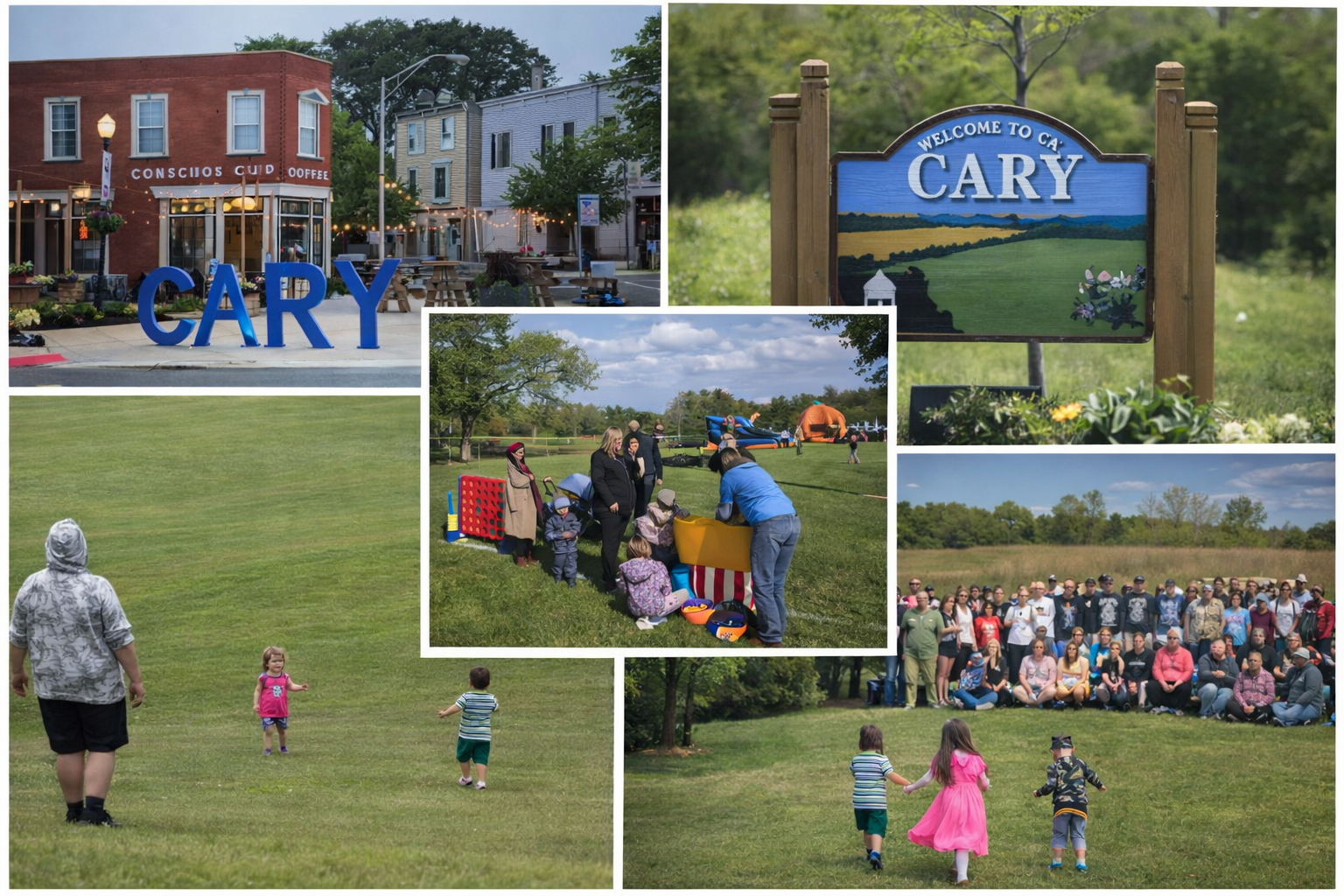
Cary reveals itself in layers. You hear it before you see it, the low rumble of a train moving through town, the whistle echoing just long enough to remind you where you are. Moments later, the sound fades, replaced by the quieter presence of the Fox River flowing just beyond the neighborhoods.
This is a town shaped by motion and patience. Trains pause traffic and conversations alike. People wait, wave, and then continue on, unbothered. The interruption is part of the routine, a shared experience that subtly connects strangers at the crossing.
“In Cary, time doesn’t stop for the train; it bends around it.”
Where Neighborhoods Meet Nature
Step away from the tracks and Cary opens into green space. Trails lead toward the river. Backyards blend into wooded edges. Kayaks slip quietly along the water, and anglers return to the same spots year after year.
The river doesn’t dominate the town; it supports it. It’s there for evening walks, weekend fishing, and moments when the day needs slowing down.
A Town Built on Familiar Rhythms
Downtown Cary feels lived in, not curated. Coffee shops know regulars by name. Small businesses serve as informal gathering places. Kids grow up learning which shortcuts cut through parks and which streets lead closest to the river.
It’s a place where people stay or leave and come back drawn by something that’s hard to name but easy to feel.
“Some towns impress you right away. Cary grows on you, one crossing at a time.”
In Cary, life unfolds between steel rails and moving water. The train always passes. The river always remembers. And the town keeps moving forward — steady, familiar, and quietly its own.