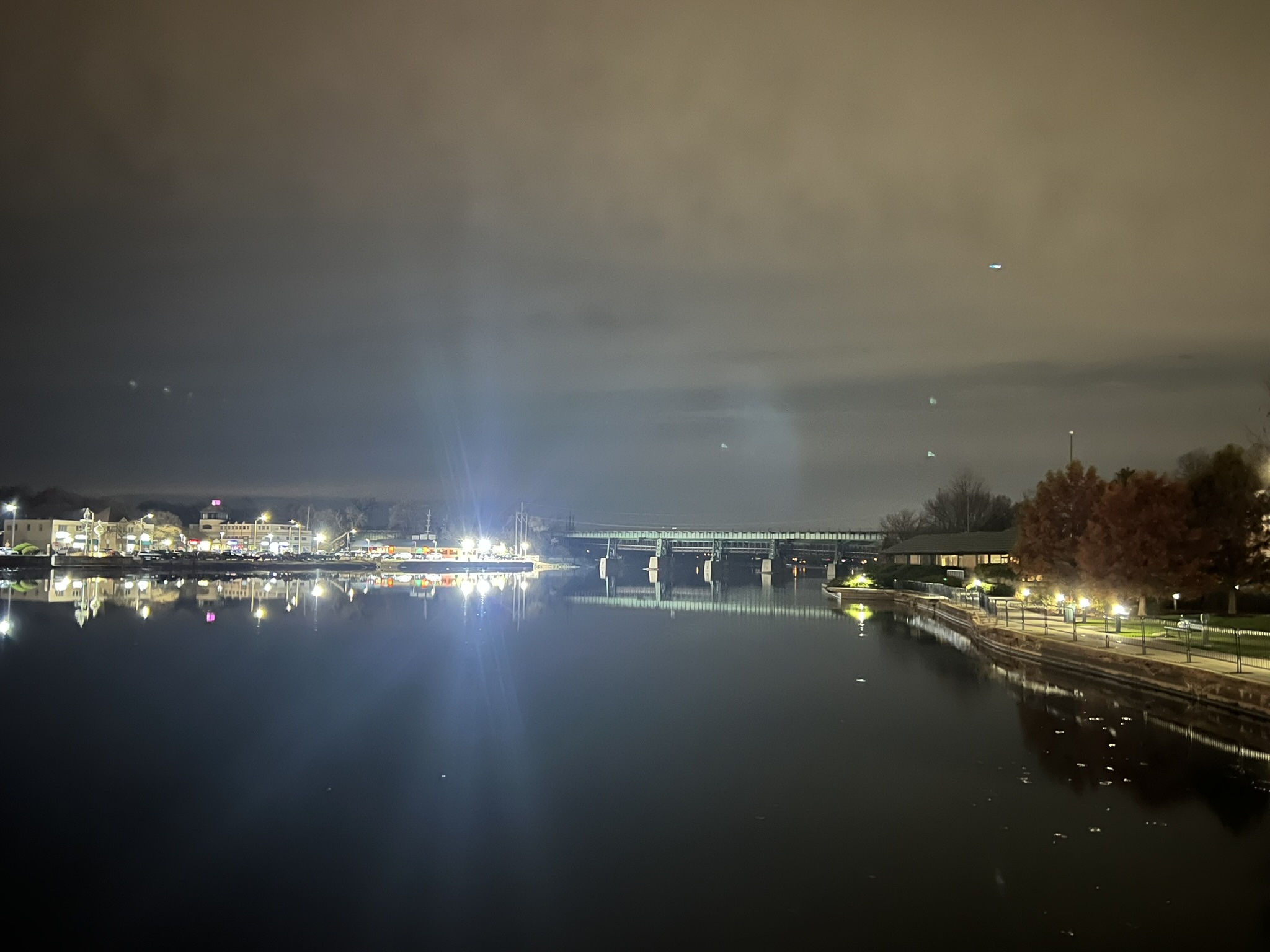
By the time the sun slips behind the trees lining the Fox River, the riverwalk in St. Charles begins to hum. Café windows glow warm. Conversations spill out of patios and onto the bricks. The water holds the last streaks of orange and rose from the sky, slowly trading them for the shimmer of bridge lights and marquee signs downtown.
On any given night, the riverwalk is a collision of routines. Dog walkers trace the same loops they’ve walked for years. Joggers in reflective vests weave past families pushing strollers. Teenagers lean over the railings, trading stories and phone screens as the river moves steadily beneath them. It’s ordinary and cinematic at the same time, a small-town stage that resets every evening.
“If you want to know how St. Charles is really doing, don’t check a spreadsheet—walk the river at dusk.”
Closer to downtown, the soundscape shifts. A guitarist outside a bar catches the ear of passersby, his chords looping into the chatter of friends meeting for dinner. Across the water, you can hear laughter drift from the patios along 1st Street, punctuated by the clink of glasses and the low murmur of people trying to stretch a weeknight just a little longer.
Down by the plaza, kids zigzag across the open space while parents keep half an eye on them and half an eye on the sky. Couples stop to take quick photos with the illuminated bridge behind them, a Fox Valley postcard in real time. Locals hardly notice how picturesque it all is—until someone visits from out of town and says, unprompted, “You actually live here?”
Where Makers and Neighbors Meet
On market weekends and festival nights, the riverwalk transforms into a corridor of tents and tables, a pop-up city of makers and small business owners. Jewelry, candles, prints, charcuterie boards, baked goods, and hand-thrown pottery line the path. The Fox River breeze flips price tags and tugs at corner weights, but the vendors hardly notice. They’re busy connecting names and faces, stories and sales.
For many of these makers, St. Charles is one stop in a circuit of Fox Valley events that stretches from Batavia to Geneva to Aurora and back again. But there’s something about the way the river curves here, the proximity of downtown, and the density of foot traffic that makes a booth on the St. Charles riverwalk feel like prime real estate for connection.
Ask almost any vendor why they keep coming back and they’ll mention the same thing: the people. Regulars who stop by to say hello even when they’re not buying. Families who remember a maker from last summer and bring friends to meet them. Visitors who light up when they discover that the person behind the table also lives just a few blocks away.
A Small Town That Refuses to Be Quiet
St. Charles wears its contradictions openly. It’s a town where you can grab coffee in yoga pants in the morning, attend a black-tie gala in the same downtown that night, and still run into at least three people you know at both. The riverwalk is where those worlds blur together—where local business owners, artists, service workers, students, and retirees all end up watching the same sunset from different angles.
On quiet winter nights, when the festivals are on pause and the wind off the water bites a bit, the riverwalk can feel almost contemplative. Streetlamps pool light on the snow-dusted path. The bridges stand in sharp silhouette. Yet even then, if you linger long enough, you’ll see neighbors bundled up and walking anyway, refusing to surrender the river to the elements entirely.
If you want to know how St. Charles is really doing, don’t check a spreadsheet. Walk the river at dusk. Count the strollers, the leashed dogs, the takeout bags, the couples stopping mid-bridge to point at a heron in the shallows. Listen for the busker who knows three chords and ten thousand lyrics, the barista heading home after close, the teenager complaining about homework while secretly loving this place.
In the end, the river keeps moving, but the town chooses what to do with the banks. St. Charles, for now, continues to choose music, lights, markets, and long, meandering walks by the water. And that choice is what turns a simple path beside a river into a story worth telling.